
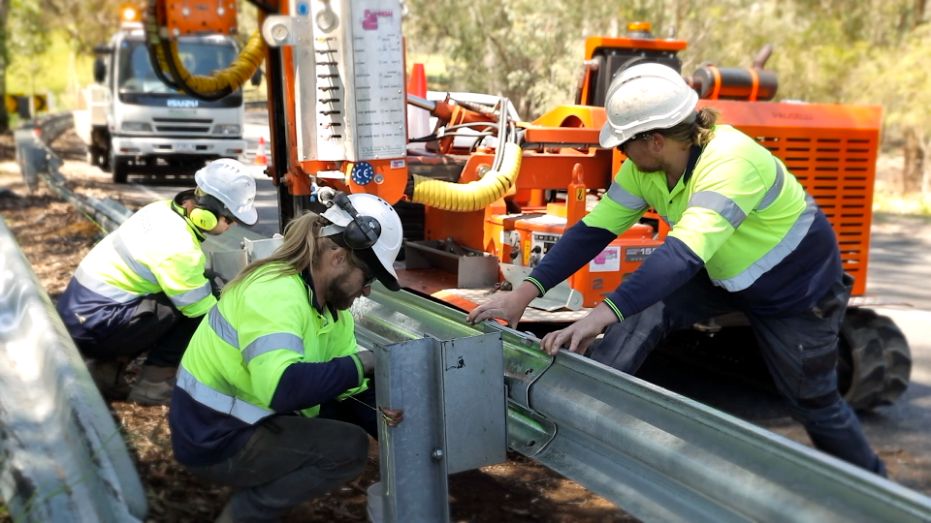
You may be able to relate to this situation if you are a mechanical contractor. The project appears to be almost complete after you have installed or replaced some rooftop units. You’ll be paid and the building owner will receive their certificate of occupancy on time. You’re informed that guardrail is needed to pass the final inspection. If you’re a mechanical contracting company, guardrail might not be in your usual scope of work. So where do start?
What is the code?
Let’s begin by defining the basic requirements and their origin. When citing railing as a requirement, the inspector is likely to refer to the International Mechanical Code. Take a look at the code.
The code requires that whenever a unit is less than 10 feet from an edge, a guardrail be installed at least 30 inches beyond the unit’s end. Let’s assume the RTU is 48 inches wide. In this case, the Mechanical code only requires a minimum railing of 9′. Easy math right? Do we have to stop here?
What am I missing out on?
It’s possible that you have a mental picture of this scenario and wonder if it is really so simple. You may think that “thirty-inches past” is a random number, and want to ensure that you are doing everything possible to protect workers when servicing the units. You are the one who is responsible for the project, and now you wear the hat of “fall protection expert”. You may be asking yourself the following questions at this stage:
- What happens if a person falls from the roof after stumbling past the 30″ railing I installed?
- How about when they return to the ladder? What about when they return to the ladder?
- Who is responsible for the safety and security of mechanical contractors who come back to maintain these units?
It is a dangerous assumption to assume that if you follow the Mechanical code, and meet the requirements for the final inspection that this will ensure the safety of future roofers. In reality, anyone who comes to this unit to service it in the future will still be violating federal OSHA codes and risking serious injury or even death.
In this article, I will not go into detail about the OSHA code. OSHA’s requirements go beyond the mechanical code requirements. While it is not your responsibility to follow the codes now, you can bring them up to the building owner.
What can I do to help?
It is an excellent opportunity to add value to your client by providing them with more information on fall protection. Now that fall protection is still fresh in the mind of the building owner, it may be the perfect time to inform them about all the options available. The building owner may choose to comply with the minimum requirements and do nothing more than that. You may also be able to open up new business opportunities, as well as establish yourself as an expert in the field. In either case, you can help prevent future accidents and OSHA violations. For more info about – guardrail installation in NZ.