
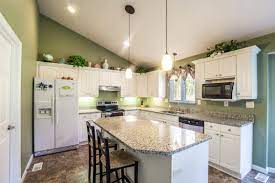
Choices. Options. Alternatives. These words can create panic in the minds and hearts of novice kitchen renovators. The excitement at choosing the best finishes and using the latest gadgets is what initially motivates a first-timer to start a journey of designer discovery. As the sample piles of tile, stone, laminate, and veneer increase, the enthusiasm begins to fade. This is because there are so many options, alternatives, and choices!
Don’t worry. Here are seven important considerations to help you in kitchen renovation service in brisbane. You never know, your dream kitchen, or at least your plan, could be yours before dinnertime.
1. Style
A checklist will make it easier to plan your kitchen. Start by deciding on a style, such as French country or retro diner, Norwegian wood, rustic café, monochrome cool, or any other name that suits your taste. Next, create an Ideabook in your Houzz profile. Fill it with images you have saved.
Next, analyse all the photos you have taken. These images will serve as visual references and will inspire your ideas. Then, organize them into smaller Ideabooks, which will show details such as lighting, counters, and tapware. Don’t forget to include the kitchen in the overall design of your house. If you have chromed block-shaped faucets in the bathroom, don’t use black tapware in the kitchen.
2. Your colour scheme
A strong color can transform a kitchen’s look into something special, but it shouldn’t be dominant. You can use a coloured toe kick under your kitchen island (also known as a plinth) or a color on all of the cabinets. To keep things simple, you can use monochromes such as grey, white, or black.
Keep colour limited to one area when space is constrained. For vertical surfaces, such as doors and cabinets, use one color and for horizontal surfaces (countertops) use a different shade. Timber is always a great partner for colour. Choose timber veneers and planks to cover surfaces that are not earmarked for color treatment. For areas that can easily be changed, like backsplashes, save any bright colors. It can be difficult to choose the right colour for your kitchen, especially with so many different materials and finishes. You may love bright colours in your kitchen, but you aren’t sure where or what to place them. This dining area is near the kitchen and features bright purple bentwood chairs. The same can be done with kitchen accessories or bench stools.
Monochrome is a hot topic. Designers are now embracing all monochromes, not just the white kitchen. They often mix different shades and materials to create interest. The grey concrete countertop, dark brown kitchen cabinets, and white engineered stones tabletop create a sleek, modern design that isn’t too overwhelming. You can choose a few neutrals to match your theme, such as chalky cream and brown for French country or arctic white with ash grey for industrial chic. Or biscotti and pista for retro diner. Warm, neutral colors are always in fashion and rarely date.
3. Your finishes
Your visual preferences and colour palette will guide your choice of finishes for cabinets, countertops, taps, and sinks. For a Norwegian wood theme, you can add contrast to the blonde veneers and black granite countertops. You can also add interest with geometric pattern tiles. Installed in an island, taps or sinks will become the focal point of the entertainment area. For minimalist designs, go for something slim and sculptural. You can choose rustic cafe-style shelves with hewn timber shelves and stainless steel countertops, as well as novel handles for the cabinetry. To break down large volumes, it is a good idea to use contrasting materials for your kitchen.
4. Your layout
A well-designed kitchen layout allows for more space and close proximity to three important work areas: food storage area, food preparation area, and clean up zone. They should be arranged in a triangular arrangement that follows the kitchen’s workflow. The key work areas must be well-spaced so they don’t conflict with one another, but not too far away that it becomes tedious. To avoid any conflict between the oven, fridge and dishwasher doors when opening, be sure to position them carefully.
5. Your storage
Smart storage solutions can maximize space and hide large appliances behind them. You can also hide appliances and supplies by using lazy Susans in corner cabinets, plate holders in deep soft-close drawers, and super-wide cutlery tray. Friends and families often gather around kitchen islands. Make sure you have as many storage options as possible. You can also provide shelves for your children to store their books in if they like to do their homework on the island.
6. Your lighting
Lighting is the jewel of kitchen design. It will make your kitchen stand out. Layering is a good idea. For example, you can place task and ambient lighting on different switches. Pendant lights that are hung low, such as those hanging from an island bench or a table lamp, can add atmosphere and a wow factor to the space. A soft wash of light can be used to highlight the feature finishes, such as LED strip lighting. Skylights are a great way to flood light into your kitchen. However, other structural elements such as regular windows, location of an internal courtyard near the kitchen, or installation of a narrow ribbon window over a kitchen bench if it is located on an exterior wall can also be used.
7. Your dining arrangements
A lot of kitchens are open-plan, so it is important to plan where the dining area will be located relative to the kitchen. If space is tight, you should position the dining area near the kitchen. However, it’s important to consider how to prevent natural light from entering the room (e.g., with a glass table as shown here), or how to clear walkways (the built-in banquette benches below can be used to save space in a small kitchen).